
When you choose a nonconventional lifestyle many people aspire to, but not many are privileged enough to achieve, it can be hard to share the downsides. You want to keep up the narrative and be “inspiring.” So when Scott Brady, founder of Overland International and mentor to many of us in this space, ended a period of full-time travel by reflecting on how inefficient the overlanding lifestyle was, I felt simultaneously jarred and validated.
The full-time overlanding lifestyle inefficient? But I worked so hard to get here! How could it be so inefficient that someone would want to stop altogether?
But of course overlanding is inefficient. I live out of a tiny vehicle. Every time I need an item, I have to move things to take it out and put it back. I have to set up my stove every day. I have to wash my clothes by hand. So much time is spent doing basic tasks, leaving less time for productive work or even relaxation. I get it. It’s true.
Maintaining healthy habits while overlanding
My husband Eric and I have been traveling full-time by vehicle for more than 11 years. So obviously we have found a way to make travel sustainable over the unusually long-term.
But our seven years living and traveling in an RV were one thing (2014-2021). Living in a Jeep and driving around the world has been completely different (2021-present).
Both our RVs were self-contained within their walls. We had flushing toilets, running water, showers, hot water, sinks, and dining tables. They were like tiny apartments on wheels.
In contrast, our Jeep home since 2021 has none of the things listed above. We have comfortable beds inside our Jeep habitat, which can be used for seating. But we can’t cook or toilet inside. We really live around the vehicle–meaning we’re outside no matter what the environment is like.
For obvious reasons, it is difficult to develop or maintain habits under these conditions. I never know what I’m going to find in the next grocery store, so I can’t meal plan. The ground might be completely saturated by rain in the morning, so I can’t exercise. The campground may be infested by mosquitos. So even though we’d hoped to stay a few nights and complete some projects, we decide to drive to the next place to escape the bugs.
I’ve known all of this and wrestled with how best to address it. But I just finished reading a book that gives voice to these challenges, explaining them from a psychological perspective.
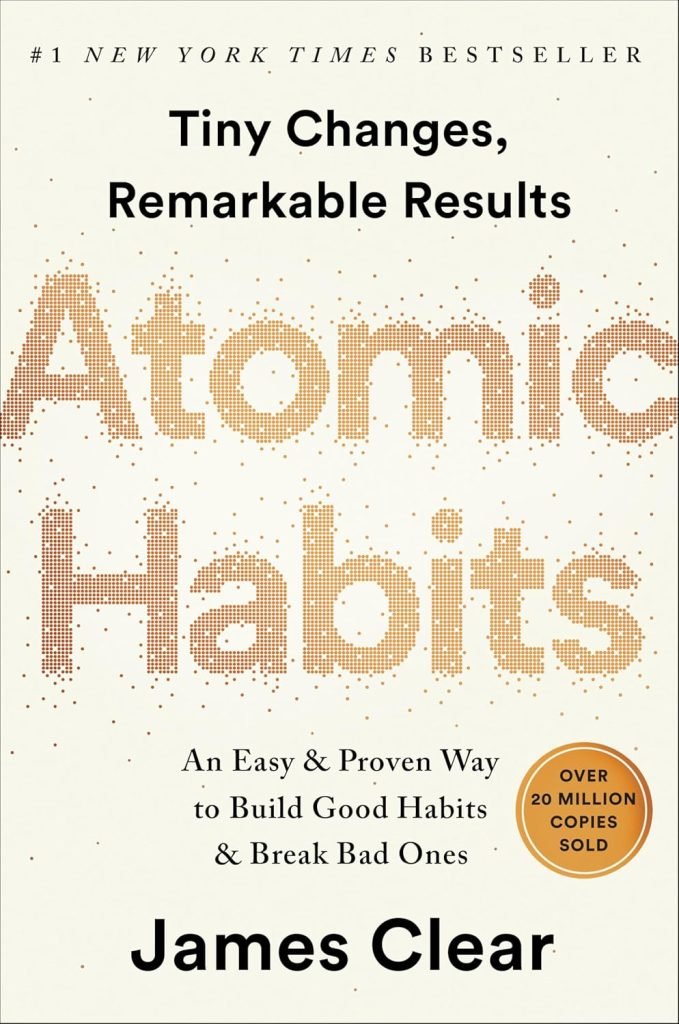
I highly recommend you read Atomic Habits by James Clear.
DISCLOSURE: THIS POST MAY CONTAIN AFFILIATE LINKS, MEANING WE GET A COMMISSION IF YOU DECIDE TO MAKE A PURCHASE THROUGH OUR LINKS, AT NO COST TO YOU. PLEASE READ OUR DISCLOSURE FOR MORE INFO.
Who should read Atomic Habits?
Atomic Habits will benefit:
- Long-term travelers or overlanders who struggle to maintain structure
- Anyone who aspires to full-time travel, but needs to achieve financial or other goals first
- Anyone who struggles to build good habits or break undesirable habits
I’m not a big self-help reader. But it just so happens that I’ve used similar strategies for decades. Everything in the book makes sense, and is explained in a way that’s accessible and achievable.
We didn't wake up one day ready to drive around the world. It took three years of preparation after the decision was made, and the groundwork was laid over years prior to that. There's no magic formula, just showing up to do the work.
Insights for long-term overlanders
If you want to go deeper into the ways habit psychology meshes (or doesn’t) with full-time travel, based on my experience, then here are several observations after reading Atomic Habits.
“One space, one use”
Our five years living in a 40-foot diesel motorhome were our most intense years of self-employment. We usually worked more than 40 hours a week–closer to 60 hours a lot of the time.
Because it was a small space, I worked sitting at the dinette, while Eric worked from the sofa. When 5 p.m. came around, we often kept working. On weekends, we often worked. We found it difficult to stop working, even when our essential tasks were complete.
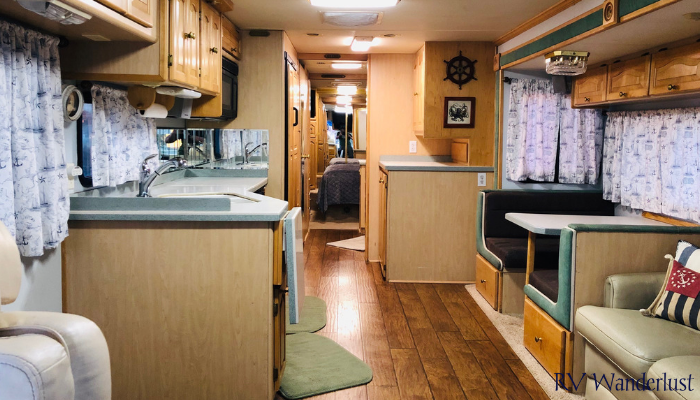
So we went straight-up Pavlov. We got a brass ship’s bell (to go along with our nautical interior decor) and hung it in our living space. At 5 p.m., we rang the bell. This signaled that our work was done for the day. Now we could use the same space (our sofa and dining table) for living and relaxation.
In Atomic Habits, James Clear says our environment cues our behavior. This is why I learned to associate the RV dinette with work and Eric associated the sofa with work. When we mix up activities in one space, it’s harder to maintain it all–especially the healthy stuff. Whenever possible, Clear says we should do one thing in one space, so we don’t confuse our cues.
It’s been six years since we owned that bell or that RV. We still live in a small space–much smaller than the 40-foot RV–and once again we tend to struggle with knowing when to stop doing certain tasks. Is it possible for us to put “one space, one use” into practice?
Constantly-changing environment
Maintaining structure is challenging for those of us who don’t have the luxury of doing different activities in separate spaces (“one space, one use”). But it’s challenging for another reason: our environment directly influences our habits, but our environment is constantly changing.
For example, Clear recommends “habit stacking” when you’re trying to create a new habit. The idea is to take a current habit, like using the restroom as soon as you wake up, and add another habit onto it, like doing 10 push-ups.
But let’s play this out. We’re currently recuperating in an apartment in Mexico for a few months, in between overlanding South America and Africa. Here is my current morning routine that I’ve been developing since we got to Mexico in March:
- 6:30 a.m. alarm
- Use the restroom
- Stretch using Bend app
- Zumba workout using YouTube video
- (Start coffee during first workout break)
- Pour coffee
- Sit down to read my Bible, answer text messages from friends, and read until Caspian gets up for breakfast
I’ve stacked several habits on top of each other. My mind now knows that I go from one straight into the other, almost nonconsciously and without having to debate about it (which is what defines a habit).
Now let’s take a look at how I might execute these habits while living out of the Jeep. What environmental factors might get in the way?
- 6:30 a.m. alarm
- Use the restroom – Where is it? Am I using the bushes or is the bathroom building far away from our camp? Where is our toilet paper? What do I need to wear? Is it raining?
- Stretch using Bend app – Is the ground dry, wet, or muddy? Who is watching?
- Zumba workout using YouTube videos – What are the conditions outside? Who is watching? Do I have enough phone data to run a 20-minute video?
- (Start coffee during first workout break) – (Not possible, this is a manual process in the Jeep with boiling water and using my Aeropress.)
- Pour coffee
- Sit down to read my Bible, answer text messages from friends, and read until Caspian gets up for breakfast – Where am I sitting? Do I need to put a Helinox chair together? Is it too cold or buggy, in which case I need to sit in the passenger seat? Is the passenger seat clear or do I need to move stuff?
When we travel and our environment is constantly changing, I’m not sure it’s possible to develop habits the same way we can when we live in a stable environment. Activities can never become nonconscious because they always require conscious effort to accomplish.
Travel changes our identity, which shapes our habits
It isn’t all bad news for travelers. Here’s a way that travel is useful for building good habits.
Clear says there are three layers of habit formation: identity, processes, and outcomes. Most people only focus on the outcome (stopping smoking, eating better, etc.). But lasting change is deeper than will power, which will inevitably dry up. Lasting change is based on our identity: who do I see myself as and who do I want to be?
In order to change our habits, we need to change our identity. This requires flexible thinking; a willingness to change.
Travel is really, really good for this. People are always talking about how travel has changed them. It’s because seeing more of the world–and especially the people in it–makes us realize there are different ways of living and values we didn’t recognize before.
So the time we spend traveling, for however long, can have a profound impact on our identity, which then positively influences our life-long habits.
Keep reading
Maybe you’re intrigued, but don’t fully understand what I’m talking about here. If you read the book, then come back to read this article, then I think it will make much more sense.
For anyone interested in how habits form, traveler or not, then I can’t recommend Atomic Habits enough. Pick up your own copy here.
-B

Leave a Reply