
Maybe you’ve considered driving down the Pan-Am through Latin America, but you don’t speak the Spanish language. Should this fact stop your trip? Do you need to know Spanish to overland the Pan-American Highway?
We just finished nearly three-and-a-half years of driving through Spanish-speaking countries, 12 countries in total (since we can’t count Belize or Brazil). Based on our experience, we’re here to answer today’s big question: should lack of Spanish language knowledge hold you back from taking this trip?

Short answer
No.
No, you don’t need to know Spanish to overland the Pan-American Highway.
Here’s what you do need:
- A warm, friendly smile.
- Willingness to look silly doing some hand motions. People have been communicating with hand motions for milennia.
- A few basic words and phrases in Spanish. This shows respect for your hosts. When they see you trying, you won’t believe how often they’ll bend over backwards to help you. And, yes, sometimes they’ll laugh at you. But in good fun.
- Google Translate’s Spanish language package downloaded to your phone, so you can use it even if you don’t have internet. More about Google Translate in a minute.
This may seem simplistic. But in our experience, it’s a complete list.
Caveat #1
I stand by my initial answer: you don’t need to know Spanish to overland the Pan-Am. But there are nuances I want to note.
The first one I mentioned already, but I’m going to say it again. Even if you’re starting from zero, you should really make the effort to learn a few basic words and phrases in Spanish.
This will happen naturally–you’d have to be purposely not trying in order to learn no Spanish during your trip. But making an effort shows you care for and respect the people around you. And it will make your life easier in the long-run.
Caveat #2
I grew up in Texas, so I studied Spanish in school. I took two years in high school and another semester at university. Even by then, I wasn’t remotely close to being conversational. Though I did know enough to study abroad in Rome and pretend to speak Italian.
Eric, on the other hand, is half Mexican and learned Spanish before English. He used his Spanish knowledge extensively during his 20 years of active duty in the U.S. Coast Guard. As we entered Latin America, he did almost all of the talking.
That dynamic shifted over the years as I learned more Spanish. But one thing never changed. With few exceptions, I never had enough confidence in my Spanish to get to know people in a meaningful way. Sure, I knew enough to order at a restaurant, share the basics of our trip, and navigate ordinary, day-to-day interactions.
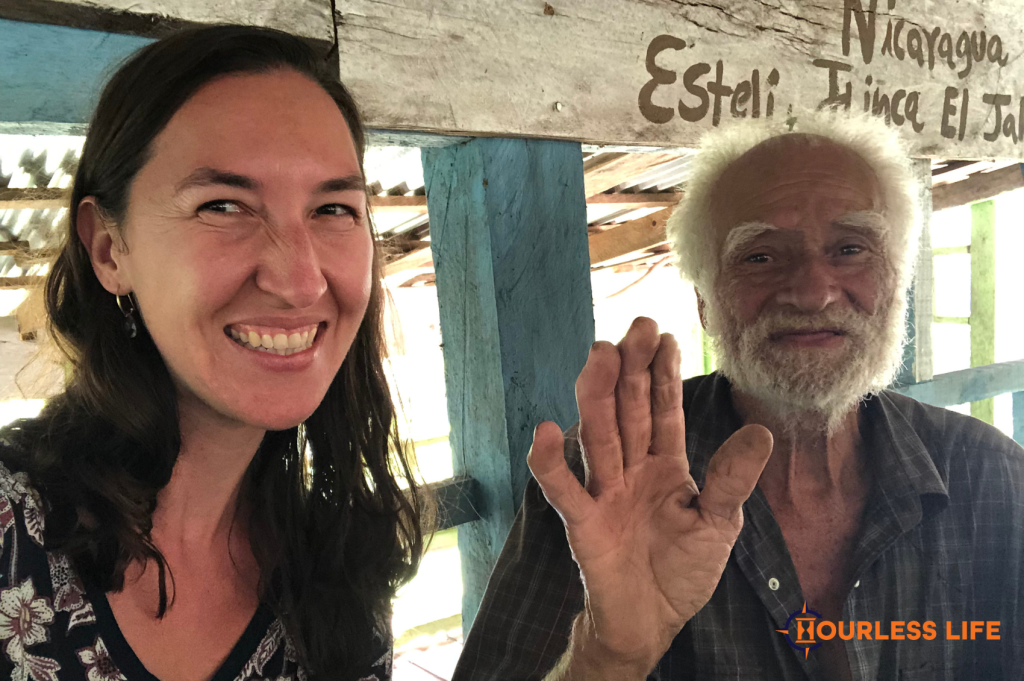
But I didn’t know enough to talk about things that matter to me in an in-depth way, like people’s stories, culture, and politics. Thankfully I had Eric to help along the way, but not enough to completely satisfy my curiosity.
So yeah, that’s something I wish could’ve been different. With better Spanish (and/or more confidence), I could’ve gone deeper with people I met along the way. I’ve heard this same thing from other overlanders, as well.
But still, I didn’t need to know Spanish to survive the trip.
But since Eric was already fluent in Spanish, you don’t really know what it’s like
This is a fair point. Though I wasn’t conversationally fluent in Spanish for most of our trip, Eric always was. So how can we tell you that you’ll be totally fine?
Here’s how I know:
Brazil.
Brazil was the first country we visited where none of us knew the language (Portuguese). I don’t know what we were thinking, but we got to the border crossing and realized we didn’t know how to say hello, how are you, thank you, or literally anything.
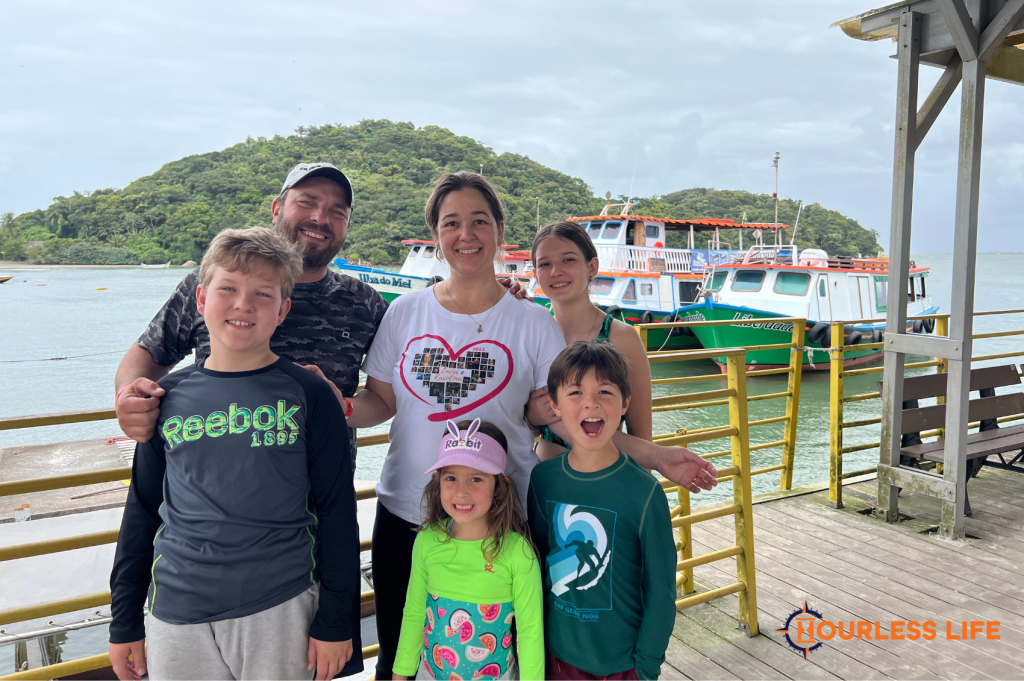
Fortunately for us, Brazilians have got to be some of the kindest people on the face of the planet. The friendly border officials, who knew some English, patiently taught us our first words in Portuguese. From there, we picked up a word at a time. But we never really knew what anyone was saying to us. Instead, we did exactly what we recommended in the list above and used Google Translate.
And we laughed at ourselves, a lot. A sense of humor is essential.
So don’t do what we did. Know a few words before you get to the border. But know it will be okay; you will get through.
More about Google Translate
Let’s talk about Google Translate, which is an incredible resource at our disposal. After you download the app for Apple or Android, you can download the Spanish language package. This way, you can use Google Translate even when you don’t have an internet connection.
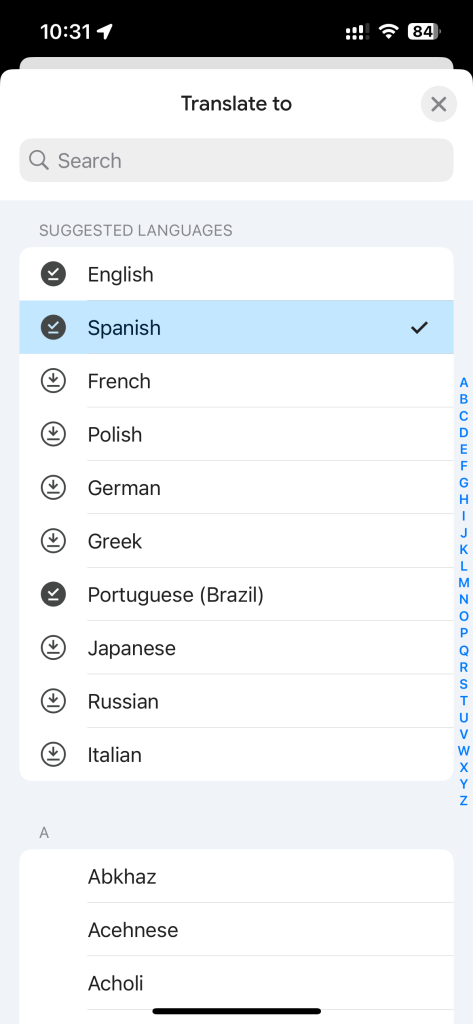
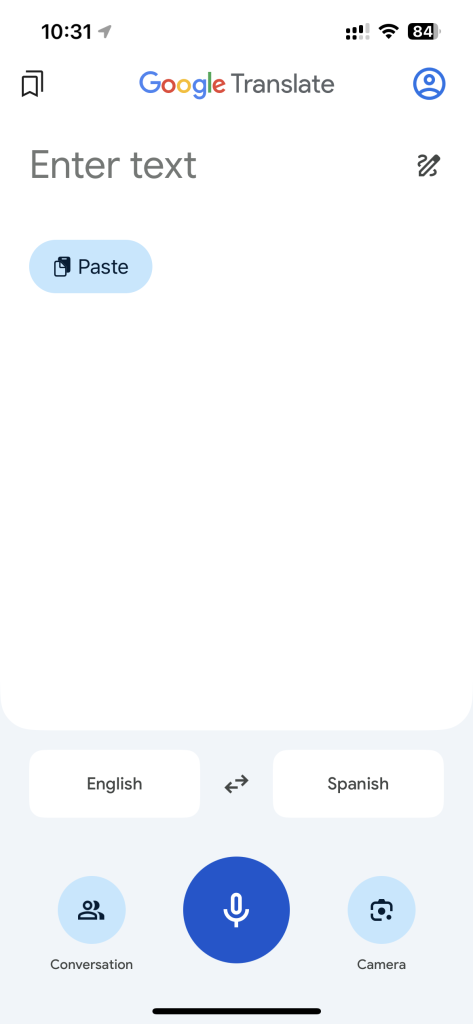
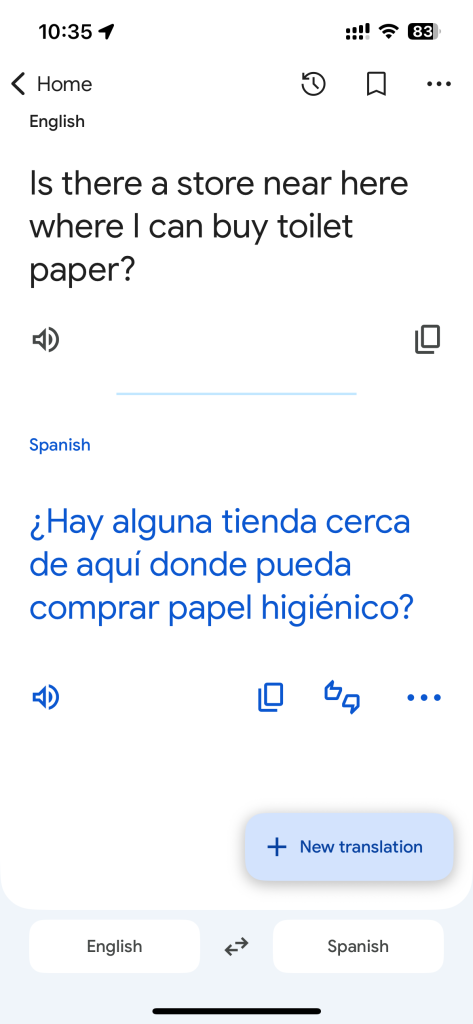
Here’s what you can do with Google Translate:
- Type in your language. The app will translate what you write into written Spanish.
- Your conversation partner can read the Spanish text or you can hit the microphone button. Then the app will read the Spanish outloud.
- This works in reverse. Your conversation partner can write in Spanish, then you can read or listen to the translation in your language.
- Sometimes writing is tedious, especially if you have a lot to communicate. In that case, you can hit the microphone and speak. Google Translate will turn your spoken words into Spanish text (written or spoken outloud).
- Google Translate also has a conversation mode, which makes it easier to go back and forth in conversation on one screen.
- Google Lens is a camera mode that captures words in Spanish and translates them to your language, right on your phone screen. I love using this feature in museums.
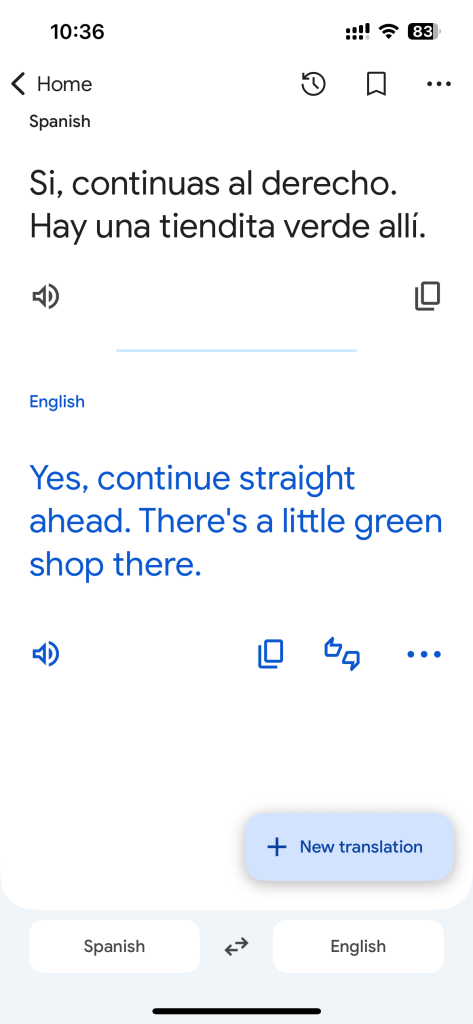
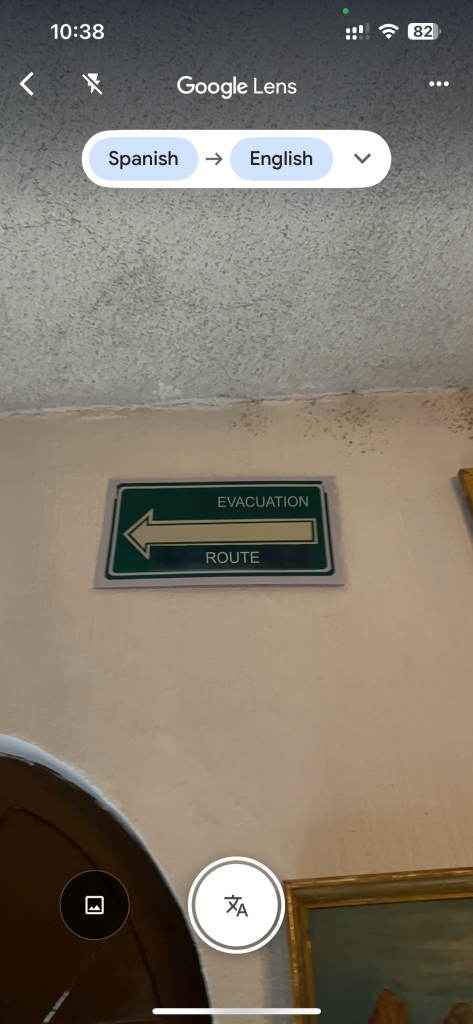
Is Google Translate perfect? No, not at all. Sometimes when you speak into the microphone, the app doesn’t record your words right. Obviously, it can’t translate properly in that case. So you either have to start talking all over again, or resort to writing.
And sometimes the translation is not correct, which can lead to miscommunication. Words don’t always translate across languages, or Google Translate does not select the proper word for your country or area (Spanish varies widely throughout Mexico, Central America, and South America).

But as long as you’re aware of the limitations, having Google Translate is definitely better than not having it! Start using it before your Pan-American Highway trip, so you’re comfortable with it before you go.
So that’s it? I’m ready to go?
Sure, buen viaje, have a great trip. But if you happen to have time before you’re planning to embark on the Pan-American Highway, then I recommend you start learning Spanish now. Learn as much as you can before you go. It’s not that you can’t do without it. It’s that you’ll be leaving lots of human interaction on the table, and human interaction is what you’ll remember most from your travels.
Here are my recommendations and resources for learning Spanish:
- Apps like Duolingo are useful for pronunciation, vocabulary, and grammar. Some speaking practice is incorporated.
- Take Spanish classes. Focus on actual conversation, rather than classes with a lot of bookwork or writing. You do not need academic knowledge for the Pan-American Highway; you need to be able to communicate by speaking. For a lot of people, they have head knowledge, but they’re nervous about talking to real people and getting it wrong. By practicing speaking in a “safe” environment like a Spanish school, you can get over your fear.
- You can also look for a language exchange in your area, which usually takes place in an informal setting like a coffeeshop.
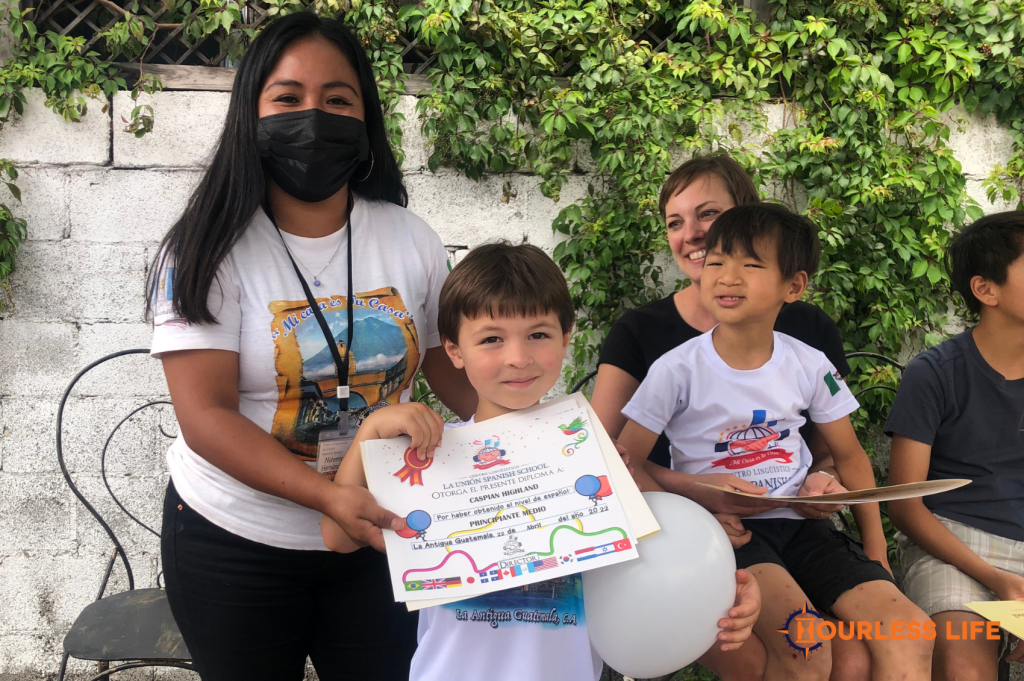
- Some people fly into a Spanish-speaking country for one month or more, solely to focus on attending language school. I’d recommend Antigua, Guatemala, for this, but there are many other options in other countries. Some places have “walking schools,” where you learn Spanish while walking around town and engaging in everyday activities.
- If you’re already on the road, then it’s not too late. Caspian and I attended Spanish school in both Mexico and Guatemala.
- Know how you learn. Some people learn best by listening, in which case Spanish language podcasts may be a great help for you. Some people are visual, and they have to see words in their mind in order to say them (me). Other people learn best by engaging their body in movement, for example copying down words or sentences. Having this awareness will help you as you learn or pick a teacher.
Most of all, be patient with yourself. I spent most of our three+ years on the Pan-American feeling like I was making very slow progress. But then, all of a sudden, I would make a leap. One of the ways to leap is by returning to a place where your native language is spoken. Having this “brain break” acts as a reset.
There’s no easy solution. You need time and practice. If you only have 10-12 months to spend on the Pan-American Highway, then chances are you will not be conversationally fluent by the time you’re done. Only now, after nearly four years in Spanish-speaking countries, do I feel like I can call myself conversationally fluent. But I still get tired or flustered sometimes, and it seems like I’ve forgotten everything I know!
But don’t be discouraged. Anything and everything you learn is a gift and a benefit. Learning another language is good for us in so many ways, from our outlook on another culture to the health of our brain. I hope you do choose to invest in learning Spanish, while staying patient with yourself and using the resources that are available.
No matter what, don’t let your lack of knowledge keep you from going.
-B

Leave a Reply